Karate Is Good For Kids
Despite warnings in the media that our children have become "couch potatoes," millions of American children participate in recreational or competitive sports. Active people of all ages benefit from regular exercise, looking better and feeling more fit and confident. Karate training can give children unique and wonderful health benefits as they grow, forming the basis of a lifetime of enjoyment and healthy habits.
|
|
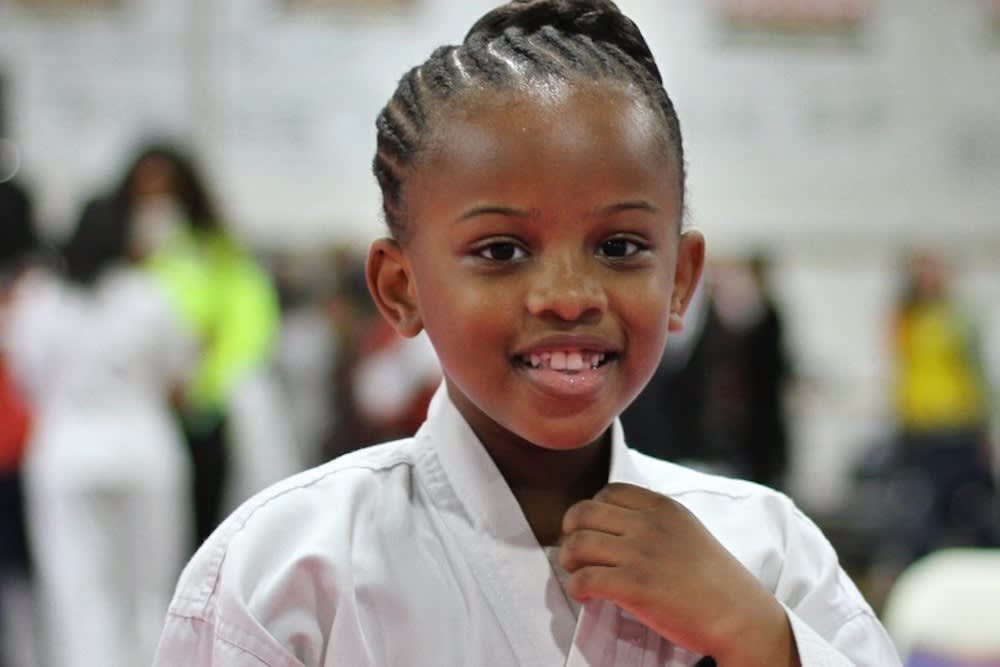
Karate training can begin as soon as children are able to show interest, pay attention, follow directions, and imitate sequences of movements. School age is a good time to start, though sometimes the younger children copy their older brothers and sisters and can start as young as 4 years. But children of all ages can make a start and still achieve advanced levels of skill; it's not like ballet where training has to start by a certain age. The pace of training is individualized, so issues of size and talent are much less important than they are in the common team sports. Children with disabilities are able to participate. Big or little, boy or girl, beginner or advanced, quick learner or slow, all children will make progress with regular training. So all will be able to achieve personal satisfaction, increased social acceptance, and better health.
|
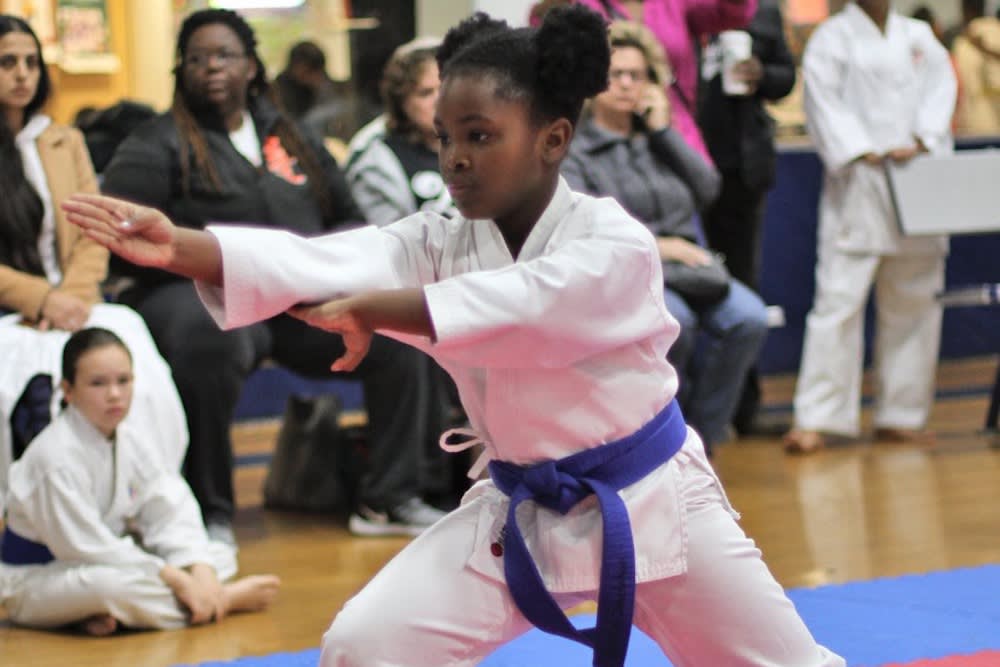
In karate, children are grouped for competition based on age, gender, size, and skill level. This reduces the risk of injuries. In fact, our federation's research on injuries shows karate competition to have significantly lower rates of injury than most children's sports, including soccer, football, swimming, and basketball. Great care is taken to control the level of contact and provide safe conditions for training and competition.
Because it's an indoor sport, training can take place all year in all seasons, with steadier, more consistent results. There's no loss of skill between seasons, and there aren't the early season injuries as the body readjusts. And there isn't the exposure to heat stress as there is with outdoor sports, or the exposure to outdoor allergens. This is particularly important for children, who are more prone to allergies and heat stress than adults.
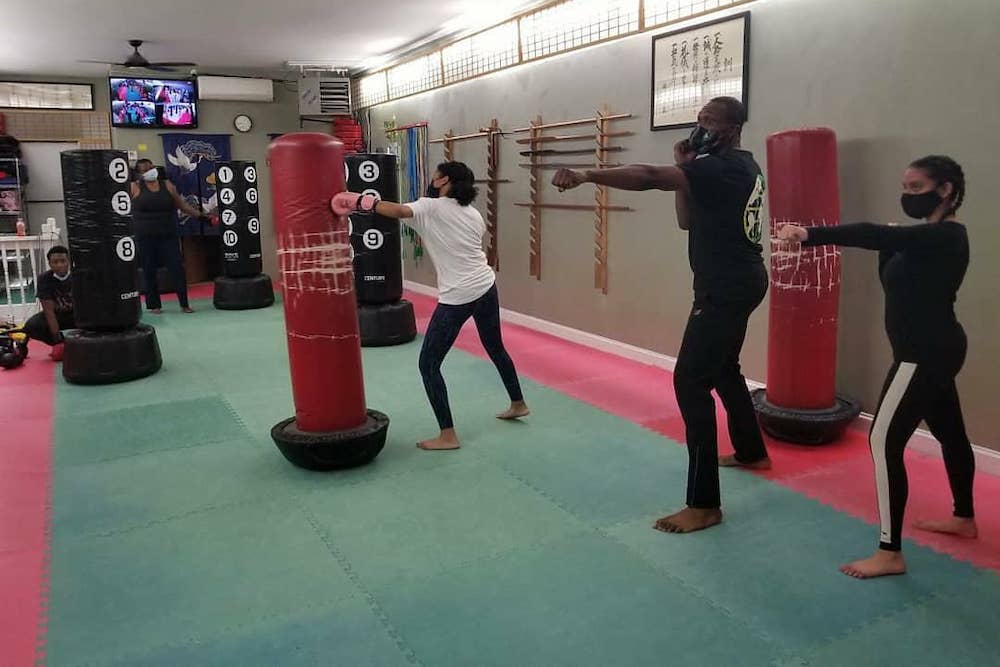
Karate training builds cardiovascular fitness, and strength and flexibility like most sports. But it also particularly builds perfect body awareness and control, precision in movement, and speed and strength. At the same time, it builds inner well being and self-esteem. As a traditional art, the focus is on respect for oneself, one's peers, and one's teachers, discipline, and rigorous self-examination and improvement. More than any other sport for children, karate and its inherent values counteract the "win at all costs" mentality so common in sports today. These values along with the individual pacing can make karate particularly helpful for children who struggle with attention and behavior. Doctors have actually prescribed it for children with ADHD. Coaches and teachers can play a crucial role in a child's life; the character of the disciplined and respectful karate sensei fulfills this role in the most positive possible way. It can be quite a treat to see an otherwise rowdy or sassy kid wait their turn, bow to the teacher and class before and after performing, and help teach a younger child!
Teenagers benefit in their own unique ways as well. Adolescence is a time that previously active kids may become more sedentary and less active, but if they continue with their training that won't happen. Teens involved in regular sports have been shown in studies to have fewer problems with alcohol and drugs, unwanted pregnancy, and other high-risk behaviors. They particularly respond to the feeling of belonging to something, and being recognized for their achievements. Adolescents who are later to mature are often left out of junior high and high school sports, but that need not happen in karate. Teens particularly benefit from guidance from a sympathetic, available adult other than their parents. This is another time that the karate sensei can perform a crucial role, and be there with the right values. The training of their minds and bodies help teenagers resist stress and handle conflict in a healthy way.
All in all, karate training provides an opportunity for safe, enjoyable sports
participation, with unique benefits for the body and mind. To see if karate
training would be beneficial for your child, have your doctor assess your child's
particular healthy, growth, and maturity. Contact Okinawa Karate Kobudo Kai
and arrange to come in and observe one of our classes. If it seems like a good
fit, plan to have your child attend 3 times a week. Stay in contact with Sensei
Clark about your child's progress, and support your child's efforts. You might
find yourself staying for class and training as a family!